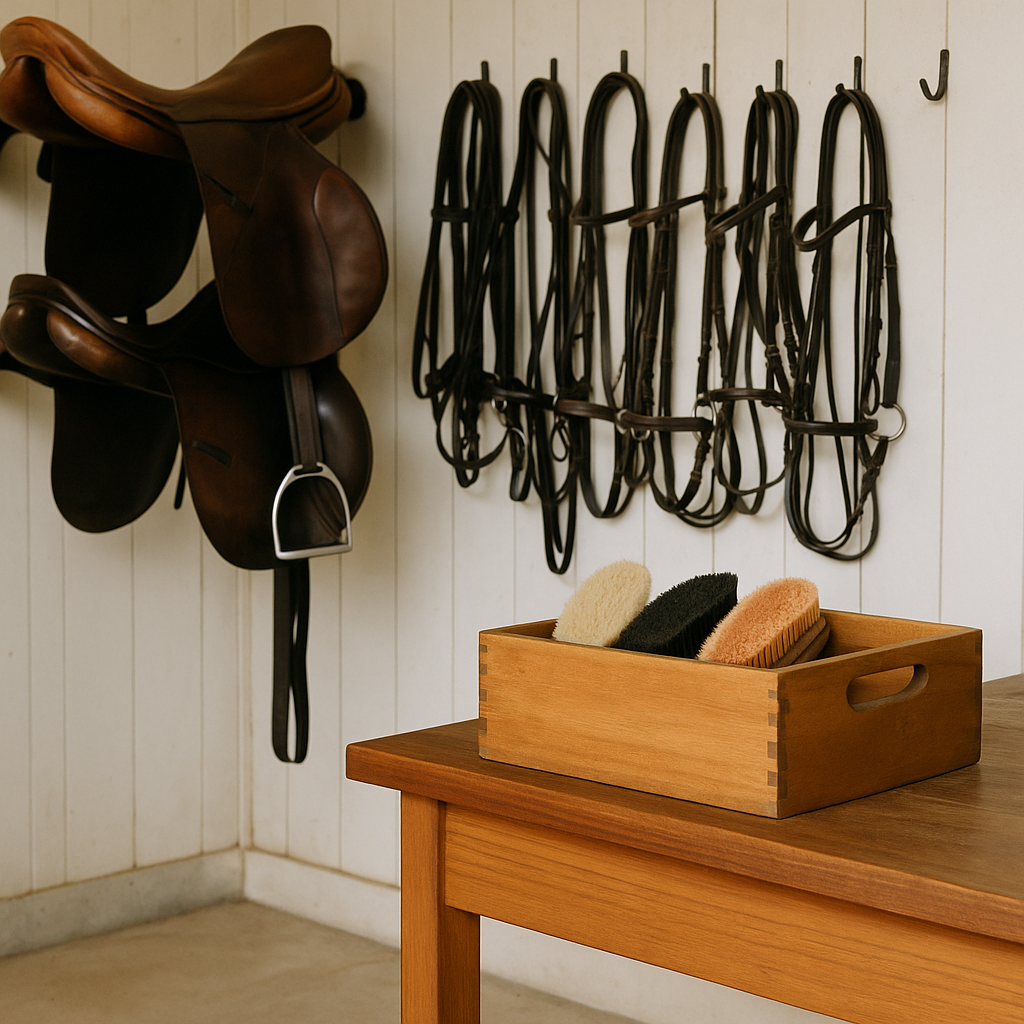
• There’s something satisfying about walking into a tidy tack room. Saddles stored in their covers, gleaming and ready for the next ride. Bridles hung neatly, grooming tools organised, everything in its place.

    Last weekend, I spent a few hours reorganising my tack room. I sorted brushes, cleaned gear, and made sure everything I use daily was easy to access. My saddle is never dusty — I keep it under a cover to protect it — but it still feels good to check it over and know it’s ready.

    As I worked, I thought about how much this mirrors my approach to teaching. When my classroom (physical or digital) is organised, I feel calmer, more focused, and more able to give my best to my students. Just like a tidy tack room sets me up for a smooth ride, an orderly classroom sets me and my students up for a positive day.

    Student wellbeing often comes down to small, consistent actions: greeting them warmly, providing structure, giving clear expectations, and ensuring they have what they need to learn. Horses thrive on clarity and consistency too. If I approach my horse with calm energy and clear cues, he feels secure. If I approach my students in the same way, they feel safe to learn and grow.

    Whether it’s preparing for a lesson or a ride, the principle is the same: the work we put in behind the scenes makes a visible difference in the moments that matter.

  • In our paddock, my horse is rarely alone these days. A small, steady pony has joined him—a borrowed friend whose job is simple but important: be there.

    The change in my horse was almost immediate. His anxiety eased. His pacing slowed. When something startled him, he looked to the pony and read the calm in his body language. The message was clear: You are safe here.

    It reminded me of the way students respond to the right kind of peer support. In the classroom, there are times when my words as a teacher are not the ones that make the difference. Instead, it is a classmate—a quiet friend who sits beside them, a trusted peer who understands the challenge, or someone who has navigated the same struggle—who helps them find their footing.

    Much like the borrowed pony, these students do not “fix” the problem. They do not take over. They simply share their steady presence until the other person feels safe enough to try again. That kind of support is powerful because it is not about rescuing—it is about walking alongside.

    Tristan Tucker’s TRT Method teaches that horses learn best when they are given the space to figure things out while feeling secure. The same is true for teenagers. They grow in confidence when they know someone is in their corner, but they are still trusted to find their own answers.

    As teachers, we cannot be the only source of calm and safety. Our students need peers who model resilience, kindness, and patience. Mel Robbins often talks about the ripple effect of courage—that one person’s choice to stand strong can inspire others to do the same. I see this every time my horse leans into the pony’s stillness and chooses calm over fear.

    Sometimes, the most important work happens quietly in the background. A steady presence. A reassuring glance. The quiet companionship that says, I’m here. You’ve got this.

    In the paddock, it is a borrowed pony. In the classroom, it might be a trusted friend. In both, it is a reminder that we do not always grow alone—we grow best with someone by our side.

  • There is a particular stillness I try to carry when I am with my horse. It is not about being silent—it is about being grounded. When he is nervous or unsettled, my job is not to overpower him or force him to “behave.” My job is to be calm, to breathe, and to help him take ownership of his own body and mind.

    Riding him when he is anxious has taught me that control is not the goal—trust is.

    This is something Tristan Tucker’s TRT Method captures so well. Rather than simply restraining a horse, you guide him to find his own sense of calm. You show him how to feel safe in his surroundings so that his confidence becomes his own, not something borrowed from you. I see this when my horse relaxes in the paddock with the little pony we have borrowed for company. The pony’s steady presence tells him, “You’re okay here.” Sometimes, just knowing someone is with you changes everything.

    I think about this often when I am in the classroom. Teenagers, like horses, pick up on our energy long before they hear our words. They know when we are flustered. They know when we are grounded. They also know when we are trying to control them instead of helping them learn to control themselves.

    When a teen is anxious or unsettled, I have learned to pull my presence closer rather than my voice louder. I give them space to breathe. I give them the tools to self-regulate so that calm becomes something they can find within themselves. This is not always quick work—but it is lasting work.

    I am reminded of something Mel Robbins writes about in The 5 Second Rule: the power of the pause between impulse and action. For my horse, that pause allows him to soften instead of spook. For my students, it creates a moment where they can choose a thoughtful response over a reactive one.

    Whether I am in the saddle or in the classroom, I am reminded that presence is more powerful than pressure. That trust is a better teacher than control. And that sometimes, the most transformative thing we can do is stand quietly alongside someone—until they are ready to move forward on their own.

  • Burnout is no longer a fringe issue in Australian education. Whether in public or private schools, primary or secondary, more teachers are reporting exhaustion, stress and a desire to leave the profession. But what’s driving it – and is it the same across all school settings?

    Based on classroom experience and current research, this article explores how teacher burnout manifests differently across sectors and school cultures. It examines the impact of heavy administrative loads, leadership styles, parental expectations and professional isolation. While public school teachers often face larger class sizes and resource shortages, their independent sector colleagues encounter increased performance pressure and customer-like scrutiny from families.

    One consistent finding across the board? Leadership visibility matters. When principals and deputies are regularly present in classrooms and genuinely engaged in the daily life of the school, staff morale improves. Research suggests this kind of relational leadership can buffer burnout and keep experienced educators in the profession.

    Ultimately, the issue of burnout is not about individual resilience. It’s about whether schools are structured to support the people at their core. Until leadership, policy and school culture align to prioritise wellbeing, teacher burnout will remain a growing threat to educational quality in Australia.

    Further Reading:

  • Not all teachers work in classrooms.

    Some lead without ever raising their voice.

    Some guide simply by being exactly who they are.

    When I think about the kind of strength I admire most, I think of women like Jess.

    Jess does not lead with words. She leads with presence. She does not need to explain her values, you see them in how she moves through the world. In the way she protects her peace. In how she shows up for her people. In the time and care she gives her horses. In the softness she reserves for her children.

    What I have learned from women like her is this:

    You do not have to give all of yourself away to be kind.

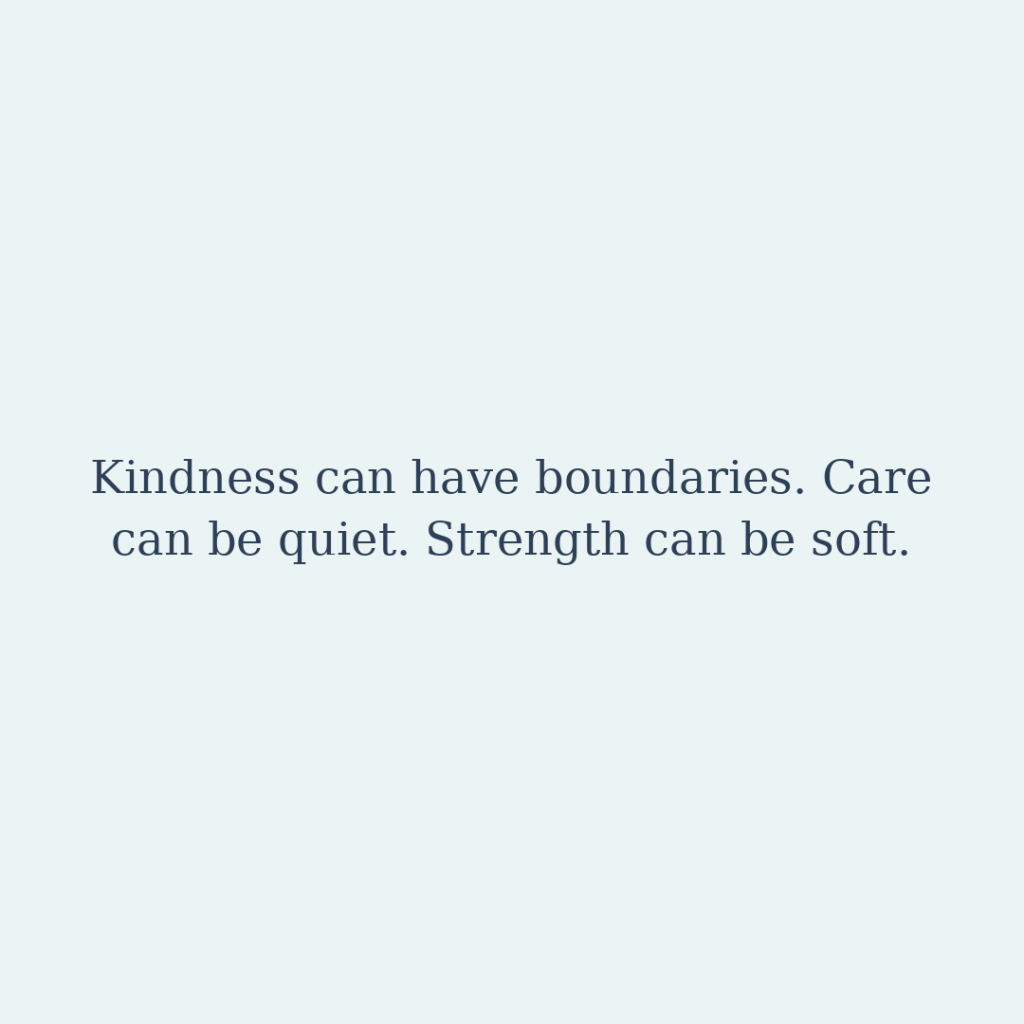
    Kindness can have boundaries.

    Care can be quiet.

    Strength can be soft.

    Women like Jess remind us that it is possible to be both clear and compassionate. That loyalty means more when it is earned, not offered out of obligation. That healing does not always look like retreat. Sometimes it looks like saddling up, stepping into the ring, and breathing your way back to yourself.

    They teach us to pay attention to what steadies us.

    To walk away from what drains us.

    To stop apologising for needing space, silence or solitude.

    And more than anything, they show us that leadership does not require a spotlight.

    It requires integrity.

    Consistency.

    And the courage to live by your values even when no one is watching.

    I have had mentors. I have read books. I have studied theories. But some of my most important lessons have come from standing beside women like Jess.

    Noticing how they carry themselves.

    Watching what they protect.

    Listening when they speak, and especially when they choose not to.

    They will never ask to be called inspiring.

    But they are.

    And if you are lucky enough to know someone like that, you will carry pieces of their wisdom long after they have spoken a word.

  • Some women walk through life without ever asking for attention. They do not broadcast their resilience. They do not seek applause. But if you stop long enough to really see them, you are changed by their quiet strength.

    I know a woman like that. Let’s call her Jess.

    Jess grew up in a house where the lights were on, but the warmth was often missing. Her parents, battling their own struggles, were physically there at times, but emotionally distant. She did not so much get raised as she grew up, navigating her own path, shaping herself from grit and instinct, rather than guidance.

    Through all of that, she found her way to horses. They gave her something the world around her could not, steadiness, clarity, presence. She learned how to be soft without surrendering her strength. And perhaps, more importantly, how to protect her peace.

    Today, Jess works in a factory. The job is tough, the hours demanding, the future uncertain. But she shows up. She works hard. And then she goes home to the things that matter, her partner, her children, and her horses.

    Her boundaries are clear and calm. She chooses carefully who she lets in. And when she does, it is a gift. I am lucky to be one of those people. Jess is one of those salt of the earth types, she will help you if you need it, give you honest feedback without softness but never without care. There is no pretense in her. Just presence.

    Watching her with her horses is like watching someone exhale.

    You can see the day leave her shoulders. You can see her reclaiming space inside herself that the world tried to shrink. She moves with precision. She rides with patience. There is no push, no pressure, just gentle correction and quiet affirmation. The same gentleness she saves for her children. The rest of the world gets her edges, but her horses and her family get her heart.

    It is in those quiet paddocks, far from any arena or crowd, that you witness her healing. Not dramatic. Not loud. Just real. And ongoing.

    Jess reminds me that strength does not always look like power. Sometimes it looks like boundaries. Sometimes it looks like walking away from noise and back toward the things that matter. Sometimes it looks like standing in a dusty yard with your horse, breathing in rhythm, softening into the parts of yourself that the rest of the world does not get to touch.

    She will never ask to be called inspiring. But she is. And I am better for knowing her.

  • There is something disarming about the honesty of a horse. They do not respond to your plans, your schedule or your expectations. They respond to your energy, your intention and the moment you are in.

    When I am with my horse, there is no hiding. If I am rushed, he knows. If I am distracted, he hesitates. If I am tense, so is he. He reflects me back to myself, calm or anxious, present or not, and he reminds me of something I often forget in other areas of life:

    Patience is not passive. It is presence.

    I used to think patience meant waiting. Now I understand it as being grounded. Holding space. Letting things unfold rather than forcing them through. With my horse, the best progress comes when I stop trying to push for it. When I give him time to settle. When I listen with my body. When I ask, wait, and trust.

    And I have come to realise that teaching is no different.

    My students, like my horse, need time. They need space to process, the chance to try without fear, the freedom to move at their pace, not mine. They do not respond to pressure or force. They respond to consistency. They respond to feeling seen. They respond to someone who believes they are capable, even when the outcome is not immediate.

    There have been lessons I have taught where I wanted so badly for it to land. I had the structure, the clarity, the resources. But something was missing. The energy was not right. The room needed stillness, not more input. Just like my horse, my students were asking me to pause. To adjust. To trust that learning was still happening, even if it did not look like it yet.

    Patience in the classroom is not about letting go of expectations. It is about knowing when to step back. When to soften. When to wait and watch before stepping in.

    Working with horses has changed how I teach. It has changed how I listen. And most of all, it has changed how I hold space for growth, my students and my own.

    There is no rushing trust. No shortcut for presence. No substitute for showing up calm, clear and willing to wait.

    That is what my horse has taught me. And it has made me a better teacher.

    “The horse is a mirror to your soul. Sometimes you might not like what you see. Sometimes you will.”
    Buck Brannaman, horse trainer and clinician

  • There are moments in your career when something knocks the wind out of you. You give everything your energy, your time, your care and it is still not enough to be chosen.That happened to me. Twice.

    I had been encouraged to apply for leadership positions. I was told I had the skill, the capability, the trust of staff. I had worked quietly and consistently to support students, mentor colleagues and lead programs that mattered. Both times I was told I would have done the role well. But I was not selected. And both times, I walked away not in anger, but in quiet grief. Grief for how much of myself I had given, and how easily that had been overlooked.

    For a while, I blamed myself. I wondered if I had been too confident. Too visible. Not visible enough. I stopped speaking up in meetings. I started questioning whether I was as capable as I had once believed. I shrank to fit what I thought others might be more comfortable with. And in doing that, I lost something of myself.

    But here is the truth I see now. I was not the problem.

    It simply was not my time. And as hard as that was to accept in the moment, I can see now that I needed space to process, reflect and reset. I learned a lot through the application process about myself, about how I work under pressure, and about what matters to me in leadership. Sometimes the learning comes in the lead up, not the outcome. And I am proud of how I showed up, even when the result did not go the way I hoped.

    My work was recognised. My ideas were respected. But they were not valued in the way I hoped they would be. And that distinction matters. Because when recognition is not met with opportunity, we begin to question our own worth. And when we stop trusting ourselves, we start waiting for others to validate us.

    Reading The 5 Second Rule by Mel Robbins was a turning point for me. It is a simple idea. Count backward from five and take action. Interrupt the doubt. Move. Speak. Begin. That framework gave me just enough space to break the cycle of hesitation I had fallen into.

    So I started showing up again. I started speaking again. I reminded myself of what I already know. I am a thoughtful, committed, skilled educator. I am organised, focused and experienced in curriculum planning and assessment. I bring structure to learning without losing flexibility. My presence with students is strong. My feedback is precise. My commitment is genuine. My standards are high.

    And none of that disappeared just because someone with a title did not choose me.

    Sometimes, the setback is not a sign that you are in the wrong. It is a signal that the space you were in could not fully see you. It does not mean you stop showing up. It means you find the place where your presence is not only noticed but valued.

    So this is where I return to myself. From the paddock. With a little more wisdom, a little more softness, and a quiet decision to stop waiting for permission.

    Five. Four. Three. Two. One. Here I am.

    Read more: Coming back to myself

    Read more: Coming back to myself

  • “Students energise me. Boundaries sustain me. Respect allows me to keep showing up with purpose.”

    Teaching matters deeply to me.

    It is more than a job or a profession. It is something I care about with my whole self. I want to be the kind of teacher who sees students clearly, who listens before responding, who brings structure and consistency to the classroom without losing warmth. I care about language. I care about connection. I care about doing things well.

    But I have also learned that caring deeply without setting boundaries is a fast path to burnout.

    There was a time in my career when I said yes to everything. I took on extra roles, mentored new teachers, gave every spare minute to planning and wellbeing programs, and spent evenings trying to do more. I wanted to be trusted. I wanted to be seen. I wanted to give students my best.

    And then I found myself running on empty.

    What I have learned since is that being the best teacher I can be does not mean giving every part of myself away. It means knowing where the line is. It means protecting the time I need to rest, reflect and recalibrate. It means saying no when something compromises the quality of how I show up. It means being available to students without being endlessly accessible.

    It means holding space for others, but also for myself.

    I believe in clear expectations, thoughtful planning and high standards. I also believe in walking away from my desk when I need to breathe. I believe in choosing calm over chaos, consistency over constant reinvention. I believe in modelling boundaries so that my students see that their energy, time and wellbeing matter too.

    Just last week, a parent stopped me to say how much their child loves having me as their teacher. They shared that their child compares other teachers to me and specifically mentioned how helpful it is when I go through assessments after returning them, showing students exactly where they gained marks or how they could improve. To me, that clarity and feedback is just part of good teaching. But to that student, it meant feeling seen and supported.

    At a recent whole school event, a former student approached me to say that I, along with one other teacher, had the most impact on them. They told me I had changed the way they saw themselves. That I always took the time to check in. That I always saw them. That stayed with me.

    Those moments are reminders of why I do this work and why doing it well matters to me. But they also reaffirm why I need boundaries in order to keep doing it with care and consistency.

    The paddock reminds me of this too. It shows me that clarity and calm are not luxuries. They are foundations. With horses, as with students, your presence needs to be steady. You cannot lead from a place of exhaustion. You cannot connect when you are disconnected from yourself.

    So I still care deeply. I still strive to do the work well. But I do it with boundaries now. Not walls, just gentle edges that keep me grounded.

    And I have learned that holding those edges is not selfish. It is what makes the care sustainable.

    Over time, I have learned that setting clear boundaries is not about disengaging. It is about protecting the clarity and care I bring into the classroom. When we are trusted as professionals, when our skills are valued and our space is respected, we can give students our best consistently and sustainably.

    “Students energise me. Boundaries sustain me. Respect allows me to keep showing up with purpose.”

  • In schools, we often associate leadership with titles. Positions like coordinator, assistant principal or head of faculty come with clear roles and expectations. But in reality, some of the most impactful leadership happens without a title at all.

    I have worked across Melbourne, Darwin and regional Victoria in a range of educational settings. Over the years, I have led teams through curriculum planning, supported student wellbeing programs, mentored early career teachers and helped create calm during periods of change. And for the most part, I did that without holding a formal leadership role.

    At times, I was encouraged to apply for positions. I was told I had the skills to succeed. I was told I would have done a great job. But in each case, the role was given to someone with a leadership title already attached to their name. And in each case, I quietly stepped away.

    I do not share this to complain. I share it because I know I am not the only one.

    Being overlooked can have a lasting impact. Even when the feedback is positive, it is hard not to internalise the message that your leadership is not real unless it comes with a title. Over time, I began to speak less, withdraw from certain spaces and question my place. I even received feedback early on that I had come in too confident, and that it was good I had lost some of that. It was said casually, but it stuck.

    What helped me make sense of all of this was returning to the thinking I had explored in my postgraduate study. Through my Master of Education in Educational Leadership at Southern Cross University, I had the chance to examine distributed leadership, psychological safety and the kind of culture that enables people to thrive. It reminded me that leadership is not about hierarchy. It is about purpose, presence and trust.

    I have seen so many educators lead in ways that never make it onto a CV. They hold teams together. They keep students grounded. They guide quietly and consistently from the middle. And often, they are the people others turn to when things are uncertain. That is leadership too.

    Now, as I prepare for a new chapter, relocating and making space for whatever comes next, I am holding onto that truth. I am still an educator. I am still passionate about wellbeing, culture and learning. And I am still a leader, even if my nameplate has never said so.

    For anyone else who has led without being named a leader, I see you. Your work matters. Your influence matters. And your leadership is very real.